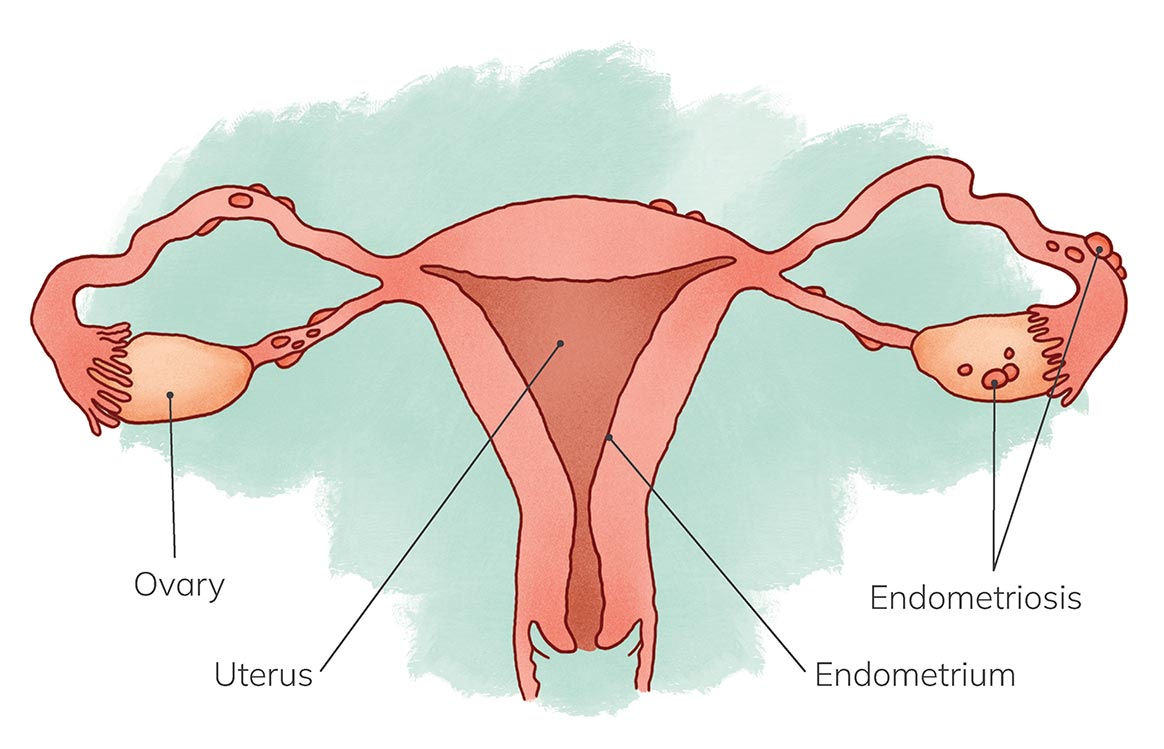
The main symptom of endometriosis is pelvic pain. Usually, this pelvic pain
is linked with menstrual periods, but for some women it happens on a daily basis, regardless of
whether they are on their period. While it’s common to experience cramping during menstruation,
people with endometriosis often experience more intense cramping, and the pain can increase over
time. Some women also experience pain with sexual intercourse.
Other symptoms include pain with bowel movements or urination,
infertility, fatigue, diarrhea, constipation, and nausea.
Pain caused by endometriosis may have a functional impact on day-to-day
life. For example, the functional impact could include making it difficult to do things around
the house, exercise, or attend social functions. It can also lead to feelings of depression and
isolation, problems with sex and relationships, and difficulty fulfilling work commitments.
Over-the-counter painkillers can help manage the pain, or doctors may prescribe medication for
more severe pain, if necessary.